Accepting the 2025 Edward L. Bliss Award for Distinguished Broadcast Journalism Education – Yay!!

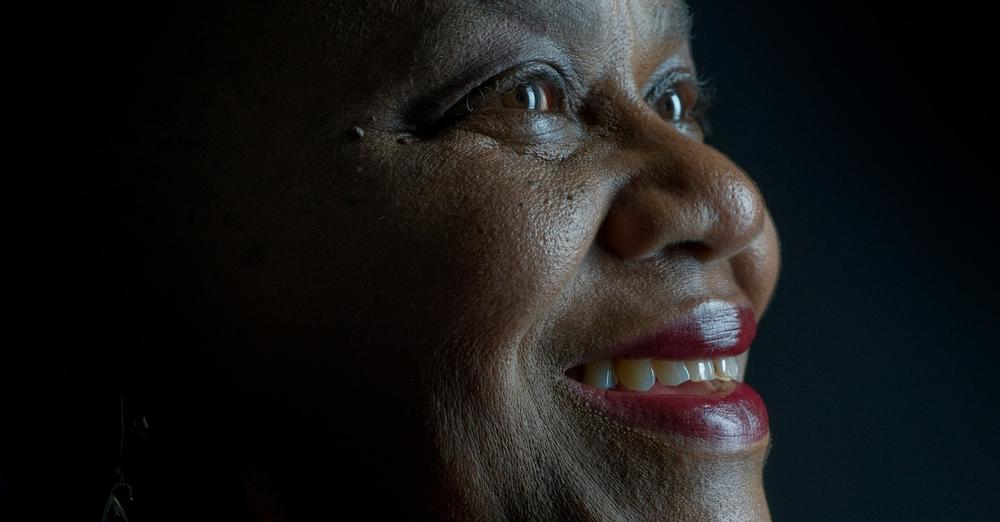
On August 8th in San Francisco, California, I became this year’s receipient of the annually-awarded (since 1983)  Edward L. Bliss Award for Distinguished Broadcast Journalism Education from the Broadcast and Mobile Journalism division of the Association for Education in Journalism and Mass Communications.

As the first African American woman and only the sixth woman to receive this national recognition, I was blown away by this honor!

For 25 years at CBS News in New York City, Edward L. Bliss served as a producer, writer and editor for legendary journalists like Edward R. Murrow and Walter Cronkite. Then in Washington, DC, Bliss went on to develop American University’s journalism program, nurturing its growth for nearly 30 years.

So needless to say, receiving this award in Bliss’ name was an exciting and a humbling experience.

This photo features the Howard University Cathy Hughes School of Communications alumni who attended the ceremony, including (front row) Dr. Rochelle Ford & Jane Philpott; (back row) Charles Turner, Pendarvis Harshaw, Dr. Kimberly Moffitt – HU School of Communications Dean, Dr. George Daniels & Mela Woods. The other photograph features Bliss Award Committee chair, Dr. William Silcock and I.

And if you’re so inclined, feel free to click on the link below to see videos of Dr. Moffitt’s and Dr. Ford’s speeches, the Bliss Award tribute video and my acceptance speech.

Enjoy and thanks so much for your support!

Bliss Tribute Videos

An Interview About Black Radio History and A Personal Journey

Last month, Mitra Kaboli one of the producers of Selects – a monthly show that unearths audio gems from the past –  interviewied me about my work as an audio documentary writer and producer.

Specifically, Mitra asked about my radio background and the role I played in the production of the Smithsonian Institution’s Peabody Award-winning documentary series, Black Radio: Telling It Like It WasGrammy Award winning singer and artist Lou Rawls served as the series’ host.

To hear the interview, click here.

And enjoy!


Celebrating The Life and Influence of Dr. Bernice Johnson Reagon

On July 16th, MacArthur “Genius” Fellow, Dr. Bernice Johnson Reagon, joined the ancestors.

Dr. Reagon was a powerful singer/songwriter, a leading Smithsonian Institution curator and a trailblazing social activist/historian/author.

She founded and led – for 30 years – the Grammy nominated acapella singing group, Sweet Honey in the Rock. The group is now celebrating its 50th anniversary. Dr. Reagon’s richly distinctive alto voice was a powerful testament to the struggles and triumphs of the American civil rights movement and contemporary freedom movements worldwide.

Dr. Reagon also was an inspirational teacher and mentor. Her unofficial mentorship of me began when I became a writer/producer on NPR’s and the Smithsonian Institution’s Peabody Award-winning 1994 documentary series, Wade in the Water: African American Sacred Music Traditions. This series explored nearly 200 years of Black sacred music history and inventions – a groundbreaking research and production undertaking.

Songs and Singing as Church  was the first show in the Wade series, and with Dr. Reagon’s steadfast guidance, I was honored to produce it along with 12 other shows in this 26-part series.

During a 5-year period, the entire Wade production team was buoyed by Dr. Reagon’s conceptual leadership, impressive musical and historical knowledge, and her keen interest in the lives and influences of the men and women who created Black sacred music – from spirituals, lined hymns and jazz to traditional and contemporary gospel.

Through Dr. Reagon I learned to employ oral history interviewing techniques that encouraged people to share their experiences, and that validated the importance of their life stories. We Wade producers couldn’t wait to interview, record commissioned musical performances, or find archival tape of the artists, ministers, congregants, scholars, and listeners who might share their insights on Black sacred music’s multilayered and wide-reaching impact.

For the 26 hour-long programs in the Wade series, we set our sights on featuring artists like BeBe and CeCe Winans, Jessye Norman, the Fisk Jubilee Singers, John Coltrane, Mahalia Jackson, Edwin and Walter Hawkins, Aretha Franklin, Billie Preston, the Staple Singers, Sister Rosetta Tharpe and Take 6 – just to name a few.

All the while, Dr. Reagon was there to advise, to listen, to critique, and to work – sometimes in weekly studio recording sessions that lasted from 7:00pm to 3:00am. She was a serious trooper/general, and we followed her lead.

As a true musical and scholarly force of nature, I thank Dr. Reagon for positively influencing – and transforming – my professional life.

To read more about Dr. Reagon, please click on the link below.

Bernice Johnson Reagon – Obituary  https://wapo.st/3zN65KX

Happy Summer and a Look at Black Radio!

Here’s hoping that you are staying as safe and as cool as possible during this sizzling summer!

If you’re looking for some summer reading possibilities, you might want to check out the link below. It will take you to an article that I wrote about a radio series I had the pleasure of working on that documented the history and significance of Black radio and African American culture.

So, pull up a chair, kick up you feet and enjoy!

Black Radio: Telling It Like It Was – Documenting Radio on the Radio


Affirmative Action & Higher Ed – An Aural Case Study

About 25 years ago, in March 1998 to be exact, NPR’s Weekend Edition Saturday aired a documentary I produced that explored how affirmative action policies in higher education admissions and hiring practices affected students, faculty and staff at a specific university from the 1960s through the 1990s.

The piece, Affirmative Action and Higher Education: An Aural History, actually was an aural case study in which I captured the opinions and experiences of various members of the University of Chicago community – including prominent faculty like historian John Hope Franklin and sociologist William Julius Wilson, the university’s vice president for research (and former Morehouse College president) Walter Massey, and former students Christopher Kang and novelist A.J. Verdelle.

The insights of those interviewees along with many others at this elite university, continue to resonate in light of the U.S. Supreme Court’s current ruling against the affirmative action policies of Harvard University and the University of North Carolina – and its broader implications for higher ed.

To hear my piece, please click on the following link: Affirmative Action and Higher Education

error: Content is protected !!